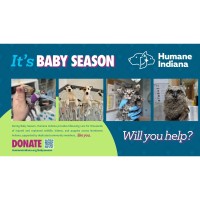

NORTHWEST INDIANA - Spring and summer in Northern Indiana bring sunshine, blooming flowers, and a surge of fragile new life. At Humane Indiana, it also signals the arrival of one of the busiest and most critical times of year: Baby Season.
Across both Humane Indiana’s Wildlife Rehabilitation Center and Shelter & Adoption Center, tiny lives begin arriving daily; injured, orphaned, abandoned, or simply too young to survive without help.
During Baby Season in 2025, Humane Indiana Wildlife cared for more than 2,800 wildlife babies, from squirrels and rabbits to opossums and songbirds. In 2026, the organization is on pace to care for more than 3,200 wildlife babies, placing growing demands on staff, foster networks, medical resources, and community support.
Every day during Baby Season begins with hours of specialized neonatal care. Humane Indiana teams carefully weigh animals, administer medications, prepare species-specific formulas, monitor development, and provide around-the-clock treatment for vulnerable wildlife patients that otherwise would not survive.
One recent patient, an Eastern gray squirrel kit, arrived after being blown from his nest during an early spring storm. Bruised, dehydrated, and suffering from a deep wound to his tiny front paw, the young squirrel required immediate intervention.
Today, after receiving medical treatment, nourishment, hydration, and dedicated rehabilitation care, he is recovering and growing stronger each day. In the coming weeks, he will move to an outdoor enclosure to continue building strength before ultimately returning to the wild where he belongs.
“Baby Season represents both incredible hope and incredible need,” said Brian Fitzpatrick, Chief Executive Officer of Humane Indiana. “Every tiny patient that arrives at our doors depends on compassionate people and lifesaving resources to survive. This work is only possible because our community chooses to stand alongside these animals when they need help most.”
The seasonal surge extends far beyond wildlife.
Humane Indiana’s Shelter & Adoption Center is simultaneously experiencing an overwhelming influx of vulnerable kittens and puppies. Animals are being discovered in backyards, rescued from unsafe environments, and heartbreakingly, some continue to arrive abandoned.
Currently, more than 120 kittens and puppies are receiving care through Humane Indiana’s foster network, relying on medical treatment, vaccinations, formula feeding, and daily support as they grow strong enough for adoption.
“Foster families are the lifeline of our shelter during Baby Season,” said Jessica Greer, Senior Director of Shelter and Clinic Operations at Humane Indiana. “We’re on track to care for over 1,000 kitten and puppies this year. When these babies come in needing round-the-clock bottle feeding and intensive care, it is our foster community that steps in and gives them warmth, stability, and love in a home environment. Their compassion quite literally saves lives and allows us to keep going during this incredibly demanding time of year.”
“Baby Season stretches every part of our organization,” said Nicole Harmon, Senior Director of Wildlife Rehabilitation at Humane Indiana. “From neonatal squirrels and songbirds to orphaned opossums and injured wildlife, our team is providing constant, hands-on care. Every successful release back into the wild is made possible through support from our community.”
Humane Indiana encourages residents who encounter young wildlife to avoid intervening immediately, as many baby animals are not orphaned and may still be under the care of their parents. Community members with concerns about wildlife should contact licensed wildlife rehabilitators for guidance.
As Baby Season continues through spring and summer, Humane Indiana is seeking donations and community support to help meet the growing need across both wildlife rehabilitation and companion animal programs.
“Creating second chances for animals is at the heart of everything we do,” Fitzpatrick said. “Whether it is a squirrel kit recovering from an injury, a litter of kittens in foster care, or an orphaned opossum receiving lifesaving treatment, these tiny lives matter. Together, our community makes their future possible.”
To learn more, donate, explore volunteer opportunities, or attend an upcoming event, visit HumaneIndiana.org